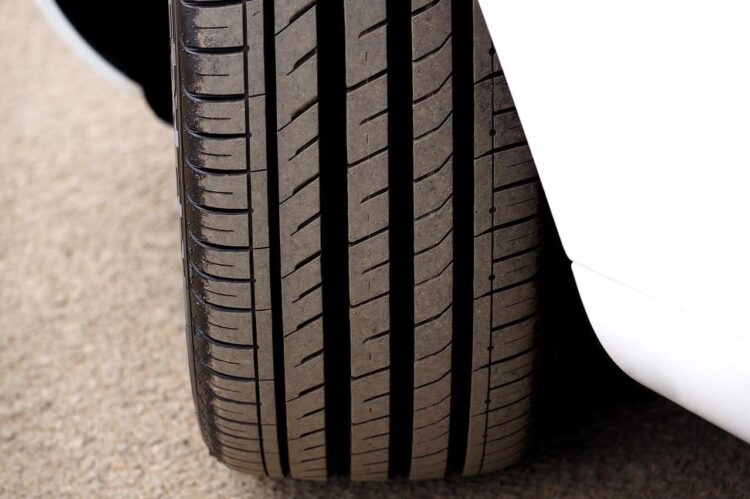
Most new drivers think passing the test means they’re road-ready, but the first year behind the wheel is when the riskiest habits form. Young and novice drivers are significantly more likely to be involved in serious road traffic accidents, with seven preventable mistakes accounting for most incidents: ignoring tyre tread depth (which can add up to 44 metres to stopping distance in wet conditions), following too closely, phone distractions, poor vehicle maintenance, misjudging speed in adverse conditions, panicking in emergencies, and driving whilst tired.

The good news is each error has a straightforward solution. Maintaining tyres at 3mm+ tread depth in summer and 4mm+ in winter, using the two-second rule for safe following distances, putting phones away before driving, conducting weekly vehicle checks, adjusting speed for conditions, taking advanced driving courses, and never driving drowsy are proven methods to dramatically reduce accident risk. Regular vehicle maintenance—particularly monitoring tyre condition—combined with disciplined driving habits transforms novice drivers into confident, safe motorists.
Why Novice Drivers Are in the High-Risk Category
HCL data on risks for new drivers shows that young and novice drivers consistently fall into a high-risk category and are significantly more likely than experienced motorists to be involved in serious road traffic accidents. Young drivers aged 17–24 account for only 7% of driving licence holders but were involved in 16% of fatal and serious accidents. Young male car drivers aged 17 to 24 are four times as likely to be killed or seriously injured compared with all car drivers aged 25 or over.
Several factors contribute to this elevated risk. Inexperience means new drivers haven’t developed automatic responses and hazard perception skills that come with years behind the wheel. They’re less adept at reading traffic situations, anticipating other drivers’ actions, and making split-second decisions in emergencies.
Additionally, novice drivers often overestimate their abilities whilst underestimating risks. They may not recognize dangerous situations until it’s too late, or they might take chances that experienced drivers would avoid. Understanding this vulnerability is the first step toward improvement.
The 7 Most Common Mistakes and How to Prevent Them
Understanding these patterns allows you to avoid them deliberately. The table below outlines each mistake, explains why it’s dangerous, and provides concrete prevention strategies.
| Mistake | Why It’s Dangerous | How to Avoid It |
| 1. Ignoring Tyre Tread Depth | Can increase stopping distance by up to 44 metres in wet conditions; causes aquaplaning and loss of control | Check monthly with 20p test; maintain 3mm+ in summer, 4mm+ in winter |
| 2. Following Too Closely | Removes reaction space; especially dangerous at high speeds or in poor weather | Use two-second rule in dry conditions; double to four seconds in rain |
| 3. Distracted by Phones | Three seconds at 30mph means 40 metres travelled blind | Put phone in glovebox before driving; use voice navigation only |
| 4. Poor Vehicle Maintenance | Components fail during emergencies when most needed | Weekly checks of tyres, oil, fluids; service every 12 months or 12,000 miles |
| 5. Misjudging Speed | Speed limits are for ideal conditions; maintaining them in bad weather causes accidents | Reduce speed by one-third in rain; slow for fog and ice-prone areas |
| 6. Panic in Emergencies | Incorrect instinctive reactions worsen loss of control | Take advanced driving courses; practice mental scenarios |
| 7. Driving Whilst Tired | Impairs reactions as severely as alcohol; causes microsleeps | Never drive drowsy; break every two hours; rest when needed |
The Impact of Vehicle Technical Condition on Safety
Whilst driver skill matters enormously, your vehicle’s technical condition plays an equally critical role. According to information from onlinecarparts.co.uk, regularly checking the main systems of a car is one of the most effective ways to increase reliability, extend service life and ensure safety on the road.
Tyre tread depth deserves particular attention, as it directly affects how well your vehicle grips the road, especially in wet conditions. The infographic below demonstrates the dramatic difference in stopping distances:
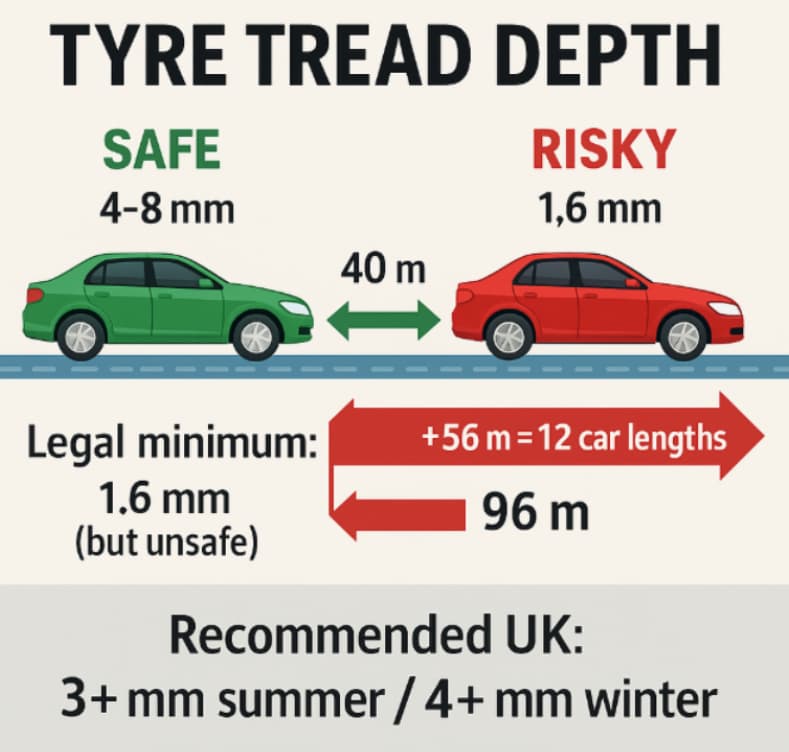
The infographic illustrates two scenarios on wet roads: a green car with safe tread depth (4-8mm) stops in 40 metres, whilst a red car with tyres at the legal minimum (1.6mm) requires 96 metres—an additional 56 metres, equivalent to 12 car lengths. The visual demonstrates the UK’s recommended tread depths: 3mm+ for summer and 4mm+ for winter.
Experts at AUTODOC remind us: “Understanding tyre tread depth is essential for road safety and staying legal in the UK.”
Whilst 1.6mm meets legal requirements, it’s genuinely unsafe in wet conditions. Research found that at this minimum depth, stopping distance increases by up to 44.6% on smooth surfaces. Monthly checks using the simple 20p test take less than two minutes but could prevent a life-changing accident.
Conclusion: Building Safer Driving Habits from Day One
The seven mistakes outlined in this guide aren’t inevitable—they’re preventable errors you can consciously avoid. Understanding why novice drivers face elevated risks empowers you to take deliberate steps toward safer driving.
Vehicle maintenance, particularly monitoring tyre tread depth, forms the foundation of road safety. Make weekly vehicle checks a non-negotiable habit, just as essential as checking your mirrors before pulling away.
The behavioural changes—maintaining proper following distances, eliminating distractions, adjusting speed for conditions, managing fatigue—require discipline but become automatic with practice. Each journey offers opportunities to reinforce good habits.
By actively addressing these seven common errors now, you accelerate your progression from novice to confident driver whilst protecting yourself and others on Britain’s roads. Take responsibility for both your vehicle’s condition and your driving decisions—this combination will serve you well throughout your motoring life.
Sources
AUTODOC – Tyre tread depth guide; UK Government (2024) – Reported road casualties in Great Britain: younger driver factsheet, 2023; RAC (2024) – Tyre tread depth, UK law and tyre safety checks; Royal Society for the Prevention of Accidents (RoSPA) – Research on tyre tread depth and stopping distances based on MIRA study