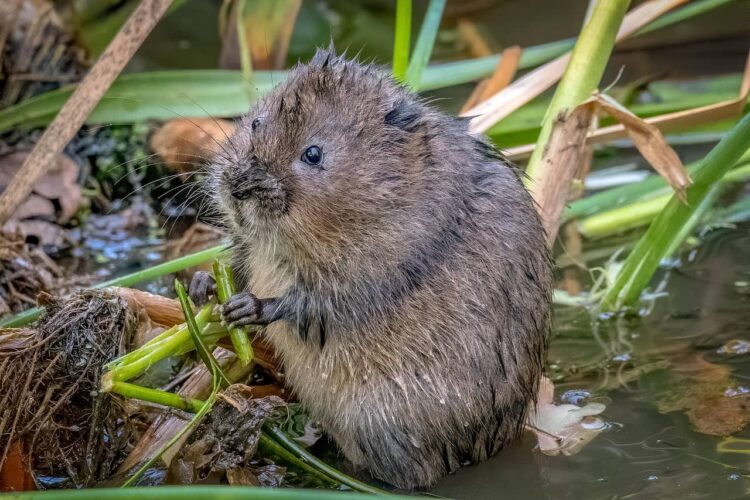
Two firms have avoided prosecution for destroying the home of water voles in Lechlade, according to Gloucestershire Constabulary.

The force was contacted by the Environment Agency (EA) in March, which reported that ditch clearance work had removed a habitat used by the UK’s fastest declining mammal species.
Rural Crime Team officers visited the site near The Wern alongside the EA, as the water vole is protected under the Wildlife and Countryside Act 1981.
Wildlife experts provided evidence showing water voles had previously inhabited the area but had left due to the loss of their habitat.
A criminal investigation was launched, identifying both the contractor responsible for the work and the land-owning company who instructed the clearance. It was determined that both parties were responsible for the illegal activity.
Investigators found there was no intention to damage the habitat and the work had not been carried out for financial gain. Both companies were given advice regarding the legal requirements to protect wildlife habitats before undertaking such work.
As part of the Community Resolution, the companies agreed to fund a two-year water vole survey to be conducted by experienced field ecologists at the Cotswold Lake Trust charity. They also made an additional donation to support local nature recovery work.
Cotswolds Rural, Wildlife and Heritage Crime Officer Richard Parker said: “In this case, it was clear that both companies were unaware that the ditch clearance work would destroy a habitat that was being used by a protected species and there was no deliberate intention to cause harm to the water voles.
“A community resolution was therefore the most appropriate and proportionate outcome, and it has provided an opportunity for the companies involved to better understand the impact their actions have caused and to make amends for the harm they have caused.
“They are now funding a survey to support the bio-diversity in the local area and they have also agreed to ensure their employees are given training on sensitive bio-diverse locations in order to protect the natural environment and any species that may live there.”