If you live in Wiltshire, it can be hard to square the headlines about a national facial recognition push with the reality of a fairly quiet, rural county. The Home Office is talking about a major expansion of face-matching across police forces, plugging into passport and driving licence photos. At the same time, Wiltshire Police says it does not yet use any AI-enabled platforms at all.
Behind those apparently conflicting messages sits a fast-moving national experiment. In London alone, more than 3.5 million faces were scanned by live facial recognition vans in 2025, resulting in just over 1,000 arrests. A new Home Office guide on police use of facial recognition, published in December 2025, tries to catch up with that reality by setting out when and how the technology should be used.
For Wiltshire residents, this is not a remote debate. The county’s representatives are already sitting on the National Police Chiefs’ Council (NPCC) board that steers facial recognition strategy. If national systems go fully live, the infrastructure will be there for Wiltshire to join quickly. The question is less “will it arrive?” and more “what will it look like when it does?”
Why facial recognition is on the move now
The government’s basic pitch is straightforward: facial recognition can help locate wanted suspects faster, identify people who breach court orders and even find missing people. The Metropolitan Police reports that live facial recognition contributed to around 1,300 arrests over the last two years in London, and identified more than 100 registered sex offenders breaking licence conditions. That is the headline number ministers now repeat whenever they promise to “ramp up” deployments.
At the same time, Britain is in the middle of a legal tidy-up. Police forces have been relying on a patchwork of common law, data protection and human rights principles to justify deployments, which courts and watchdogs have repeatedly questioned. The Home Office has now launched a consultation on a dedicated legal framework for police use of biometrics and facial recognition, explicitly aiming to move away from this improvised approach.
That consultation runs in parallel with real investment in infrastructure. Government documents describe a new “national facial matching service”, backed by several million pounds, designed to let forces search millions of custody images more quickly and, potentially, to link into wider databases such as passports and driving licences. The aim is a joined-up system where live cameras, uploaded stills and historic photo records can all feed into one matching engine.
For now, the technology is far more visible in London than in counties like Wiltshire. But the direction of travel is clear: live scanning at big events, retrospective searches on CCTV and a national matching hub in the background, all wrapped in a new legal framework rather than improvised force-by-force policies.
At a glance: The UK is moving from ad-hoc trials towards a national facial recognition system, backed by new laws and a central matching service. London is the test bed, but the model is designed to extend to forces like Wiltshire.
How police facial recognition actually works
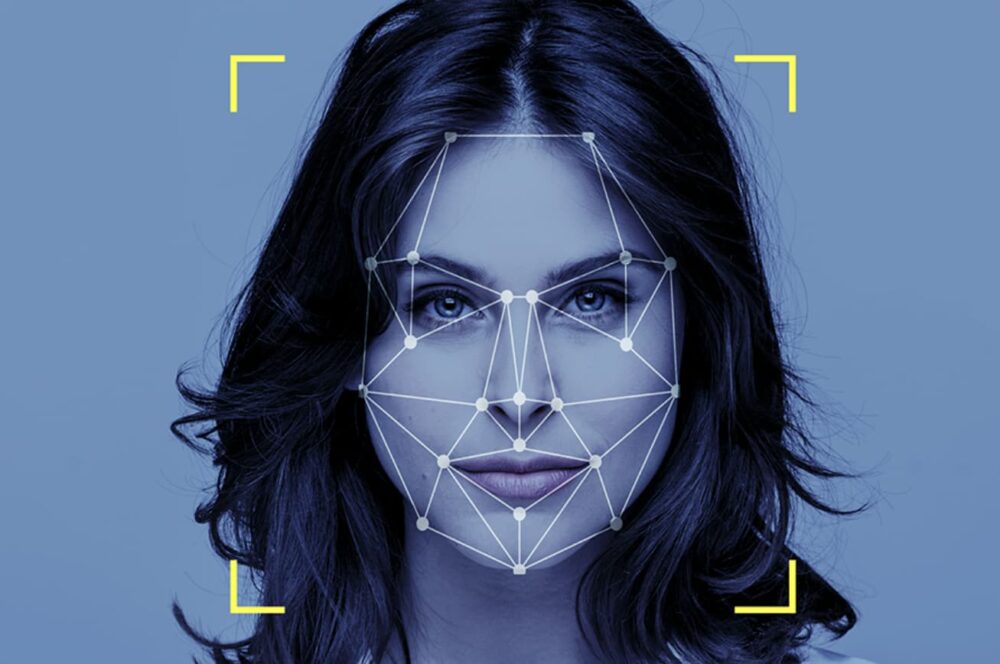
The new Home Office guide uses three main labels for police facial recognition.
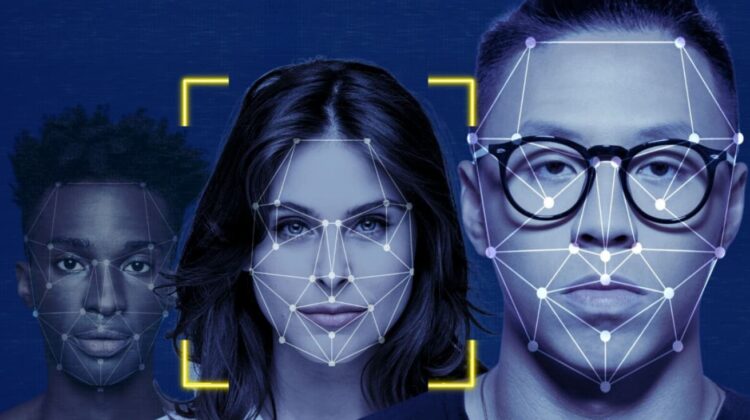
- Live facial recognition (LFR) uses cameras in real time, scanning passers-by and comparing their faces against a “watchlist” of people of interest, such as those wanted on warrants or subject to court orders. Alerts go to officers on the ground, who then decide whether to stop someone.
- Retrospective facial recognition (RFR) takes still images from sources like CCTV, body-worn video or doorbell cameras and runs them against databases of custody images. This is used as part of investigations rather than as a street-corner dragnet.
- Operator-initiated facial recognition (OIFR) is essentially a mobile app. An officer takes a photo of someone during an encounter and checks it against police records to confirm identity without a formal arrest.
Crucially, the guide stresses that the algorithm is meant to provide an investigative lead rather than a verdict. An alert should prompt an officer to take a closer look, not to assume that the person in front of them is the person in the database. It also insists on paperwork: forces are told to have clear policies, equality impact assessments and oversight arrangements in place before switching systems on.
The NPCC board minutes show how this is playing out nationally. Representatives from forces across England and Wales, including a Detective Superintendent from Wiltshire, are already discussing software frameworks, National Physical Laboratory tests of algorithm fairness and standard operating procedures for different use cases. In other words, even where cameras are not yet rolling, the governance architecture is being built.
At a glance: Police use live facial recognition for real-time watchlists, retrospective tools to search old footage, and mobile apps for identity checks. Policy and paperwork are supposed to wrap around all three.
Bias, mistakes and why safeguards matter
The big controversy is not whether facial recognition ever works, but whether it works fairly. A new National Physical Laboratory study, commissioned by the Home Office, found that the retrospective system used with police custody images has sharply different false positive rates depending on who is in the frame. At one common setting, the false positive identification rate was 0.04 per cent for white subjects but 4.0 per cent for Asian people and 5.5 per cent for Black people. For Black women, the rate reached 9.9 per cent.
Those numbers echo earlier international work. A study by the US National Institute of Standards and Technology in 2019, which tested 189 commercial algorithms, found that some were between 10 and 100 times more likely to misidentify Asian and Black faces than white faces, especially in “one-to-many” database searches similar to police use. The Home Office has now publicly acknowledged that the tools deployed by UK police have shown bias, with false positives around 100 times more frequent for Black and Asian people overall than for white people in certain test conditions.
Campaigners also worry about how images are handled once they have been captured. Still frames from body-worn video or shop CCTV are often sharpened, brightened or cropped before they land on a briefing slide, and a quick bout of online photo editing can make someone’s skin tone, hair colour or clothing look very different from the original footage. That may help officers or witnesses see details more clearly, but it can also make a fallible machine match look more convincing than it really is.
Legal and academic critiques go further, arguing that the way live trials have been run amounts to a kind of uncontrolled experiment on the public. A University of Birmingham paper on live facial recognition tests in London, Wales and continental Europe describes them as a “largely ungoverned ‘wild west’” that lacks robust ethical and legal safeguards. Law reform charity JUSTICE has used the same “AI wild west” language for policing more broadly, warning that 43 forces are experimenting with AI tools without common standards or transparent oversight.
For Wiltshire residents, the lesson is simple: the problem is not just whether an algorithm works in the lab. It is how it is deployed, combined with other evidence and questioned when it goes wrong.
At a glance: Official tests show facial recognition is far more likely to misidentify Black and Asian people, especially women and younger adults. Critics say real-world trials have raced ahead of clear safeguards.
What all this could mean in Wiltshire

So where does Wiltshire sit in this picture? An FOI response from November 2025 states that Wiltshire Police “do not use AI-enabled platforms” at present. The force is not running live facial recognition vans through Salisbury or Swindon, nor is it piloting predictive algorithms behind the scenes. That is a significant point of reassurance for anyone worried that the London model has already been silently adopted here.
At the same time, the same NPCC minutes that describe national plans for testing new facial recognition frameworks list Wiltshire’s Detective Superintendent among the attendees. Wiltshire is part of the national conversation on which suppliers to use, how to test for fairness and how to draft policy. If and when a national facial matching service and clear legal framework are in place, local leaders will have a ready-made path to switch the technology on.
Local life is already becoming more camera-heavy. Town centres are lined with council and shop CCTV, many homes now have doorbell cameras, and footage from these systems is already used in investigations. When local businesses share appeal images on social media, they sometimes tidy them up with online photo editing to make faces clearer, which can help the public recognise someone but also risks overconfidence in a picture that began as a blurry frame.
Where Wiltshire residents might be scanned
If Wiltshire follows the pattern seen in London and South Wales, the first live facial recognition deployments are likely to be highly targeted rather than blanket coverage. Examples from other forces include:
- Football matches and large sporting events, where police want to spot people subject to banning orders.
- Busy shopping streets and transport hubs, focused on watchlists of wanted suspects.
- Major festivals, protests or night-time operations in defined “hotspot” areas.
Retrospective searches are already easier to imagine. A serious assault in a town centre late at night, captured only on a grainy camera at the edge of a square, could be the kind of case where detectives ask to run a still image through the national matching service once it is fully available. Rather than sending photos to all forces manually, Wiltshire could query a national database, including custody images and, potentially, passport and driving licence photos, if ministers press ahead with their plans.
Your rights and routes to complain
One consistent theme in research on facial recognition is that the technology is only as fair as the human systems around it. Under British law, a correct live facial recognition alert does not on its own create reasonable suspicion; officers are expected to consider other factors before stopping and searching someone. The new Home Office guide reinforces this, telling forces that human officers must always make the final decision and that deployments should be “necessary and proportionate” for clearly defined aims.
One practical safeguard is to remember that photographs are not neutral facts. If an officer, school or employer shows you an image and asks you to confirm it is you, it is reasonable to ask whether it has been altered through online photo editing, and to point out anything that does not match your real appearance. The law does not require you to agree with a facial recognition match simply because a system or another person says so.
If Wiltshire does begin using live or retrospective facial recognition, residents will have several routes to challenge its use:
- Complain to Wiltshire Police if you believe a deployment was unfair, poorly signposted or led to an improper stop.
- Contact the Information Commissioner’s Office if you think your data protection rights have been breached, for example if your image was retained without good reason.
- Use FOI and subject access requests to ask what systems are being used, how watchlists are built and whether your image is held in police databases.
In practice, taking notes immediately after any troubling encounter, keeping copies of correspondence and seeking legal advice early are all sensible steps. Even in an age of AI, paper trails still matter.
At a glance: Wiltshire is not yet using facial recognition, but it is deeply involved in national planning. Residents should expect targeted deployments at major events first, and they will keep rights to challenge unfair use and biased matches.
In summary
Facial recognition is moving from science fiction to routine policing far faster than most people realise. London’s experience, with millions of faces scanned and a relatively small number of arrests, shows both the promise and the limits of treating faces as data points. The national push to create a legal framework and a central matching system means counties like Wiltshire are unlikely to remain on the sidelines for long.
For Wiltshire residents, the key is to stay informed rather than alarmed. At the moment, the force is not running AI-enabled projects, but its leaders sit at the table where national standards and software choices are being set. The latest research on bias and the “AI wild west” in policing shows why local scrutiny will be essential as that technology moves from boardroom to high street. Knowing how facial recognition works, where it is likely to be used and what your rights are when it gets things wrong will matter just as much here as it already does in the capital.
FAQ
Will Wiltshire Police start using live facial recognition soon?
There is no public timetable, and an FOI response says Wiltshire Police does not currently use any AI-enabled platforms. However, the force is involved in national planning, so once the legal framework and national matching service are in place, it could adopt the tools relatively quickly.
Can police already search my face against a database?
Police can search images from crime scenes against existing custody photo databases using retrospective facial recognition, but this is presently concentrated in a few forces. National plans aim to standardise and expand that capability, potentially including access to passport and driving licence photos if ministers follow through on proposals.
How big is the bias problem in facial recognition?
Recent UK testing found false positive rates as high as 5.5 per cent for Black people and 4.0 per cent for Asian people, compared with 0.04 per cent for white subjects, with Black women particularly affected. International and UK studies alike warn that some systems can be up to 100 times more likely to misidentify people from certain minority groups.
What should I do if I think I was wrongly flagged?
If you believe you were stopped or questioned because of an incorrect facial recognition match, ask the officer which system was used and make a note of the time and place. You can later file a complaint with Wiltshire Police and, if necessary, raise the issue with the Information Commissioner’s Office or seek independent legal advice.
Could facial recognition make Wiltshire safer?
Supporters argue it can help find wanted suspects and missing people faster, especially when officers are stretched. Critics point out that benefits need to be weighed against biased error rates, privacy intrusions and the risk that some communities feel they are under permanent suspicion. The outcome in Wiltshire will depend on how carefully the force designs, tests and oversees any future deployments.