
If the courts don’t start jailing paedophiles for their despicable crimes, there will be a murder. One day people will feel so violently upset that they will kill a sex offender.

Across Wiltshire and the UK, people caught with indecent images of children walk free from court – despite the very real impact of their offending.
Instead of hard prison time they are usually given a suspended sentence or community order. The closest many come to a prison cell is a locked glass dock in the courtroom.
For many readers, this is impossible to understand. The crimes involve the sexual abuse of innocent youngsters, yet the punishment often appears to fall short of public expectation.
The law is clear: downloading and sharing indecent images of children is a serious offence.
Judges are guided by sentencing frameworks which take into account factors such as the number and category of images, previous convictions and the likelihood of reoffending.
But what the public sees is different. They see someone found with hundreds of indecent images, and they see that person leave court the same day.
It creates a sense that the system does not grasp the gravity of the harm. Each image is a record of a child being abused and viewing them only creates a market it.
Every file represents a victim. The demand for these images fuels further exploitation. So why are so many offenders not going to prison?
Part of the answer lies in sentencing guidelines. Courts are required to consider mitigation such as early guilty pleas, previous good character and engagement with treatment programmes.
A guilty plea can reduce a sentence by up to a third. That reduction can be the difference between immediate custody and a suspended term.
There is also pressure on the prison system. The UK’s jails are overcrowded, and successive governments have grappled with capacity issues.
Judges are acutely aware of that reality. Custody is often described as a last resort.
Another factor is risk assessment. If a defendant is assessed as posing a low risk of contact offending, the court may decide that supervision in the community is sufficient.
That reasoning is difficult for many people to accept. In the public mind, someone who derives sexual gratification from images of abused children is already a danger.
There is also a cultural element within parts of the justice system. Some still view image offences as less serious than physical contact offences.
That distinction may exist in law, but it does not sit comfortably with victims’ advocates. The psychological and physical harm inflicted in the creation of those images is undeniable.
When offenders avoid prison, the message received by victims and the wider community can feel dismissive. It risks undermining confidence in the courts.
Here in Wiltshire I regularly report on these cases. The comments beneath my articles are often filled with anger, sometimes threats of violence or wishing death upon them.
Late on Tuesday evening (10 March), the neighbour of former police officer Callum Denley – who lives in Malmesbury – was threatened with death while in his garden in what is believed to be a case of mistaken identity.
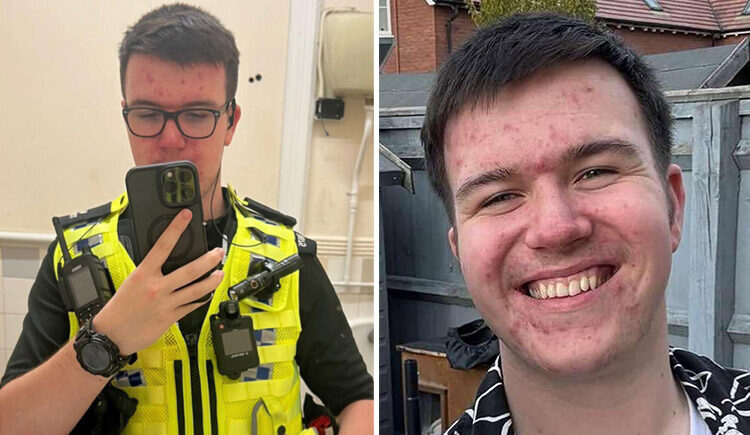
Denley’s been to court three times over the past year and pleaded guilty to offences relating to the possession of indecent images of children. He keeps walking free from court with only a suspended prison sentence.
It’s not just men either – back in December 2025, Samantha Franklin avoided custody.
Understandably, people find this an abomination. People ask how someone can be caught with Category A images, sometimes more than once, and not go to jail. They question whether the justice system reflects society’s values.
Now the community are wanting to take matters into their own hands. Two wrongs don’t make a right, but try telling them that. People don’t want paedophiles living next door, next to schools, walking the streets.
If sentencing continues to fall short of public expectation, confidence in the system will keep eroding. That anger is already visible and it is intensifying.
The overwhelming majority of people will never resort to violence. But it only takes one individual, one moment of rage, for irreversible harm to be done.
The justice system exists to maintain order and protect the vulnerable. If it fails to convince the public that child sexual exploitation is being treated with the utmost seriousness, the consequences may reach far beyond the courtroom.