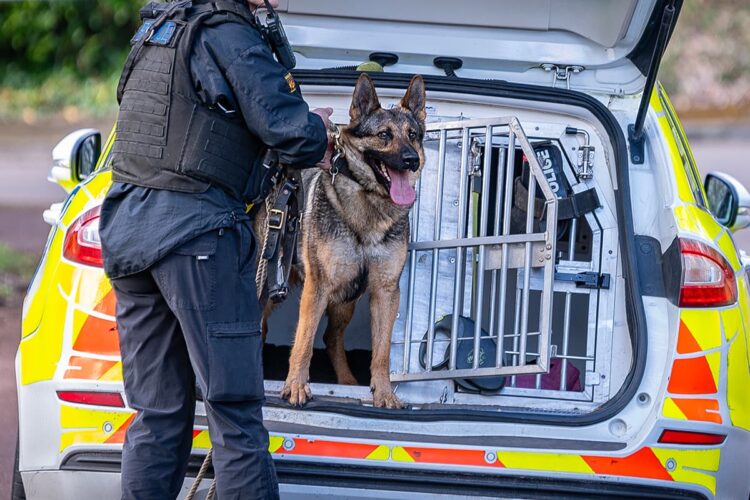
Two Wiltshire Police dogs have been put to sleep after testing positive for a deadly infection, Wiltshire 999s can now reveal.

The dogs were found to have Brucella canis during routine testing in September, prompting the force to urgently seek specialist veterinary advice.
Following the positive results, Wiltshire Police made the decision to euthanise both infected dogs to eliminate the future risk of the disease being passed to other animals or people.
The remaining dogs in the force’s dog unit were isolated while further testing was carried out.
Wiltshire Police said all of its other dogs have since tested negative for Brucella canis.
Specialist Ops Chief Inspector Ben Huggins said the deaths had been particularly difficult for the handlers of the two dogs and colleagues across the wider unit.
“This is a devastating time for their handlers and the wider dog unit, and welfare support has been put in place,” he said.
The force said it followed relevant guidance after discovering the infection and notified partners and other relevant organisations.
Police are now awaiting further guidance following the test results.
Despite the impact on the dog unit, Wiltshire Police said its service to the public has continued as normal throughout the incident.
Mutual aid support has also been arranged for the dog unit when required to ensure operational policing is not affected.
Chief Inspector Huggins added: “I’d like to reassure our communities that our service has been unaffected during this incident and mutual aid support to our dog unit has been arranged when required.”
The UK Health Security Agency (UKHSA) said the risk of Brucella canis being transmitted to humans is very low.
Brucella canis is a type of bacterial infection which can affect dogs, with measures taken to reduce the risk of it spreading to other animals and people.
Government guidance is available for owners whose dogs are infected or suspected of being infected with the bacteria.
It also provides information for dog owners and veterinary professionals on steps that can be taken to reduce the risk of transmission to other dogs and humans.