Casino games attract players with different expectations.

And oh yeah, Some people seek entertainment and accept random results without deeper analysis. Others study options and test systematic methods to achieve better results. The skill vs. luck debate determines how people manage risk, manage money, and interpret profit or loss. Even platforms like ringospin casino operate within a strict mathematical framework where all results are based on chance.
Luck rules the essence of all casino games. Random number generators, shuffling decks and spinning wheels create unexpected sequences. No participant can control the order of the cards or the position of the roulette ball. Each event is independent of the previous event. Understanding this principle forms the basis of rational decision-making.
The role of luck in casino games.
Luck describes outcomes that result from random processes. In the casino environment, operators design systems that prevent predictability of short-term results. When a player activates a slot spin, the software immediately generates a number that identifies the combination of symbols. Human decision does not affect this calculation.
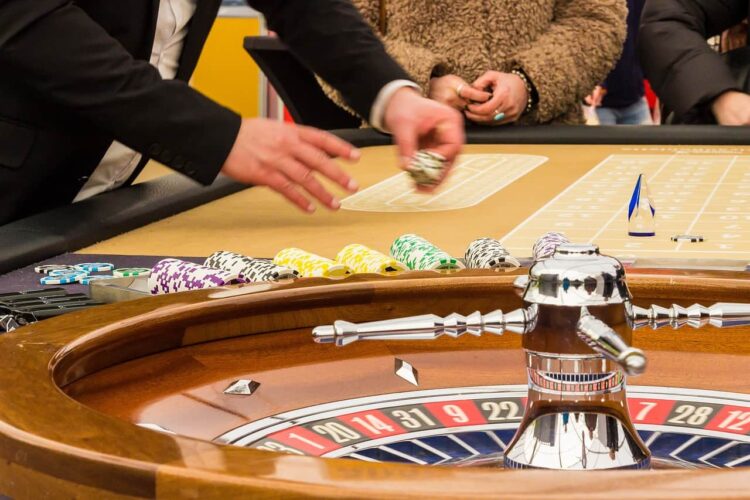
Roulette presents another clear case.
Seriously, The dealer spins the wheel while shooting the ball in the opposite direction. Physical movement and probability determine the final number. Even a detailed observation of the previous cycles does not reveal the next result.
You know what? Luck comes in the following forms:
Slot machines
Roulette
Keno
Lottery style calls
Scratch based games
In these cases, the strategy focuses on financial discipline rather than controlling results. Players decide how much to bet and for how long, but the odds remain fixed.
The house edge provides long-term profit for the operator. Casinos set up pay tables with real mathematical odds. For example, American roulette has a single zero and a double zero, that increases the house edge compared to European roulette. No betting style can remove this structural margin.
Where skill affects results
Some casino games allow you to make decisions that form long-term predictions. In these cases, knowledge and discipline are important.
And oh yeah, Blackjack is a good example of this. Players can choose to hit, stand, double or split. Mathematicians have calculated ideal responses for every possible hand combination. If the player strictly follows the basic strategy, the house edge is reduced to the lowest percentage. Card counting can change the edge somewhat under certain circumstances, although it requires intense concentration and large bankroll reserves.
Seriously, Poker offers a stronger element of skill. Players compete against each other and not against the house.
And oh yeah, The casino takes a fee from every pot, but the decisions determine the results. Trained participants calculate betting odds, evaluate betting patterns and assess risks. Over a bunch of sessions, informed decisions lead to stronger statistical performance.
The key skill factors are:
Probability calculation
Financial management
Emotional control
Learn the grammatical differences
Watch your opponents
Skill does not eliminate variance. It models the expected value over a large number of rounds.
Comparing Skill and Luck Across Games
The table below illustrates how various casino games balance chance and decision-making.
| Game | Skill Impact | Luck Impact | Approximate House Edge |
| Slots | Very Low | Very High | 2%–10% |
| Roulette | Low | High | 2.7%–5.26% |
| Blackjack | Medium–High | Medium | 0.5%–2% (with strategy) |
| Poker | High | Medium | Rake varies |
| Baccarat | Low | High | 1%–1.2% (banker bet) |
This comparison highlights an essential point. Even in games where knowledge reduces house advantage, luck dominates short-term results. A blackjack player can make mathematically correct decisions and still face consecutive losses. A skilled poker participant can play a hand perfectly and lose due to card distribution.
Skill influences probability over time, not individual outcomes.
These are betting systems
a bunch of players rely on regulated betting systems in hopes of beating THE casino.
The Martingale system of roulette recommends doubling the bet after each loss until a win occurs. While this method makes sense on paper, scheduling constraints and limited funding limit its use.
Seriously, A long losing streak can quickly deplete your funds.
Human psychology often misinterprets random sequences.
And oh yeah, When red appears repeatedly in a roulette game, some people expect black to follow. Each session remains independent.
Past results don’t affect future results.
Verified random number generators ensure fairness in a regulated environment. But fairness does not guarantee profitability. The house edge remains the same regardless of betting style.
Financial management as a practical strategy
Players cannot control the results, but they can control the financial exposure.
And oh yeah, Bankroll management is the most practical approach to luck-based games.
Effective management includes:
Set a strict budget for the session
Divide the money into fixed betting units
Avoid attempts to recover losses by force
End the game after reaching predetermined profit targets
Record results to monitor behavior
These measures don’t change the odds.
It reduces emotional decisions and limits potential damage.
Short-term dispersion and long-term waiting
Variability refers to fluctuations in results. High variance games, such as slot machines, produce rare but large payouts. Low-variance variations, such as basic strategy blackjack, generate smaller fluctuations.
Short-term results often mislead players. A novice can win early and attribute success to intuition. Another player may follow optimal decisions, but often loses. Only extended play reveals true statistical projections.
And oh yeah, Professional-level players who focus on skill-based games rely on large sample sizes. Hundreds or thousands of laps show the athletic build.
Casual participants rarely reach this size, that increases the role of luck in the experience.
Psychological influence on decision making
Emotions greatly influence casino behavior. The thrill of winning can lead to higher stakes. Frustration after a loss can lead to impulsive risk-taking.
The skill includes emotional regulation and rational thinking.
Common cognitive biases include:
Gambler’s Fallacy: The belief that past events influence independent future outcomes
Confirmation bias: focusing on positive outcomes while ignoring losses
Overconfidence Bias: Excessive belief in personal abilities
Being aware of these tendencies promotes better control and disciplined play.
Conclusion
Casino games combine skill and luck in varying proportions. Luck in all its forms governs short-term results. Skills create long-term expectations in selected games where decisions affect probability. No strategy can completely eliminate a home’s advantage but informed decisions can reduce the disadvantage under certain circumstances.
Seriously Players who understand these differences approach gambling with realistic expectations. They recognize that discipline and knowledge support consistent behavior while accidents are inevitable. The balance between these elements determines the structure of any casino experience.