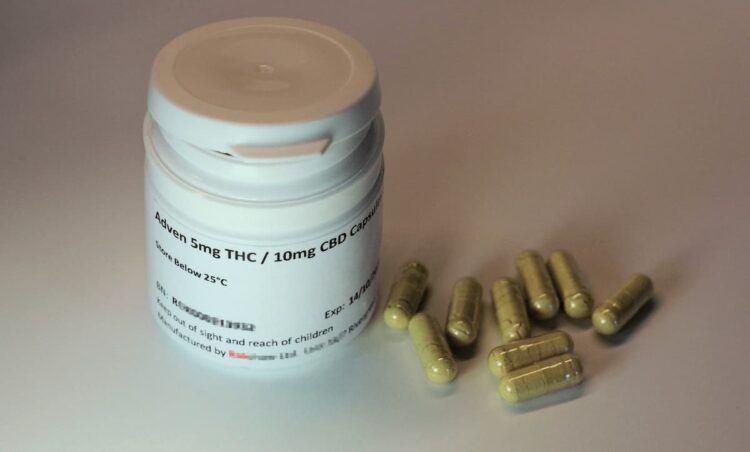
The NHS, and other public services in the UK and Wiltshire, are currently under sustained financial pressures. There is little sign of that changing any time soon. One of the key drivers of financial expense in the NHS is long-term pain causing conditions. Millions of people suffer in this way across the country. It costs the country in many ways, as the NHS pays for patients’ care and they are often also off work and economically inactive because of it. But could be there be another way?

Medical cannabis is a growing field on the private market, and many are campaigning for the NHS to begin prescribing it for chronic pain. It has been legal for many years now, yet the public healthcare provider has been reticent to get involved. This article will look at why that is, what the arguments are for and against medical cannabis on the NHS and what the short-term future outlook is.
The Current State of the Market and Why the NHS Isn’t Part of It
Despite it being fully legal for prescription since 2018, the NHS has only prescribed medical cannabis-derived medications half a dozen times over this period. However, going into 2026, there are some 75,000 to 90,000 prescribed medical cannabis patients in the UK – nearly all of whom go through private clinics.
At the moment the best medical cannabis clinic UK patients can find is usually their only option. Comparison sites help prospective patients find the top options from the dozens available, across factors such as price, variety and quality of cannabis medicines available and expertise and delivery of care at each step of the process.
So why is this the case? Well, the main barrier is the NHS’ medicines regulator NICE (the National Institute for Health & Care Excellence). NICE has refused to license medical cannabis for prescription on the NHS. It cites insufficient evidence and the possible risks of cannabis as reasons to not prescribe it on the NHS.
However, this argument has come under much criticism. Long-time drug reform advocate and one of the world’s foremost experts on the subject, David Nutt, recently co-authored a report that looked at NICE’s claims in comparison with real world evidence. It found many of NICE’s concerns were misplaced and largely ignored tens of thousands of positive patient reports from the UK and around the world.
It also pointed out that clinical double blind placebo trials are not always the best standard for judging every medicine, and that NICE, in fact, currently licenses some 60 other medicines that have seen less clinical study than medical cannabis.
The Arguments for Increased Access – Economically and for Patients
Although the expansion of private clinics offering medical cannabis has filled the gap in some ways, if the NHS began prescribing medical cannabis the projected uptake would be huge. The fact is, private clinics, while not hugely expensive, are not cheap either. Meaning many of the people who may stand to benefit the most from it simply can’t afford it as an option.
On recent study by the Centre for Economics and Business Research, in collaboration with a large UK-based clinic, found that expanded NHS access to medical cannabis could bring £4.5 billion to the economy over the first five years. This money would come from a range of factors including:
- The expansion of legal UK-based medical cannabis growers who pay taxes and employ thousands
- The potential return to the workforce of at least hundreds of thousands of people
- Less reliance on imported and expensive opioid medications, in an increasingly fractious global market
There are currently millions of people off work in the UK with long term illnesses, and a significant number of them suffer from chronic pain. Which is an issue medical cannabis is of increasingly known efficacy in treating. In one 2025 study of patients at a large UK clinic, 97% of nearly 2000 patients with chronic pain said their quality of life improved after starting medical cannabis treatment.
In another study from Canada, a large dataset of patients saw a 44% reduction in opoid use after being offered medical cannabis treatment as an alternative therapy. The NHS currently spends hundreds of millions on prescribed opioid pharmaceuticals yearly.
A Majority of Doctors and the Public Think the NHS Should Prescribe Medical Cannabis
In most polls and surveys of recent years, just over half of the British public supports having medical cannabis treatment as an option. Only around 10% to 20% of people regularly poll as being completely against it, and the rest usually say they don’t know or aren’t informed enough to have an opinion.
People can already go online, do some research through ratings or comparison sites and buy the best cbd available – perfectly legally, and delivered to their door in days. The evidence is also piling up for its efficacy treating a range of conditions. So why should NHS GPs not be allowed to prescribe it either?
That seems to be the opinion of most people with chronic long term health conditions. In some surveys up to 70% of Brits living with chronic pain said they would consider medical cannabis if reccomended by their GP. According to multiple polls conducted over the past few years, some 70% to 80% of NHS GPs themselves would be willing to prescribe medical cannabis for certain conditions if it was available to them.