Emergencies demand quick thinking, seamless coordination, and the ability to act under pressure. Traditional training for first responders—police, firefighters, and paramedics—has relied heavily on classroom instruction and live drills. While effective, these methods can be costly, logistically challenging, and limited in scope. Today, Artificial Intelligence (AI) simulations are emerging as a transformative tool to train the next generation of emergency personnel, combining realism with adaptability in ways never before possible.
Why AI Simulations Matter in Emergency Training
The Challenge of Traditional Training
Live fire exercises, mock disaster drills, and medical simulations have long been the gold standard in first responder training. However, they are resource-intensive, often requiring physical spaces, specialized equipment, and large numbers of personnel. Moreover, these exercises cannot easily replicate the full spectrum of unpredictable, chaotic scenarios responders face in real life.
The Promise of AI Simulations
AI simulations use machine learning and predictive modeling to generate dynamic training environments. These systems can adapt in real time to a trainee’s decisions, offering feedback and escalating scenarios to test resilience. A paramedic-in-training, for example, can treat a simulated cardiac arrest where patient vitals respond realistically to interventions.
Applications Across Emergency Services
Police Training
AI simulations allow officers to practice de-escalation techniques in lifelike virtual environments. Unlike static role-play, AI-driven characters react unpredictably, testing an officer’s judgment under stress. A 2022 RAND Corporation study found that recruits exposed to adaptive AI training showed a 27% improvement in conflict resolution skills compared to those in traditional training.
Firefighting and Rescue
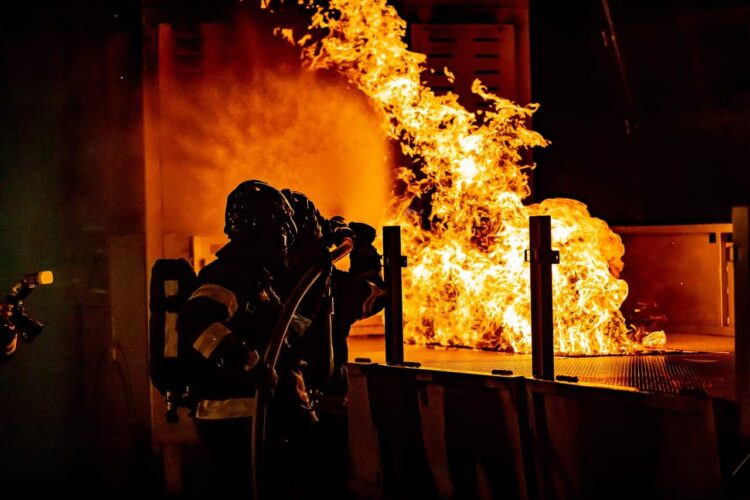
AI-driven virtual reality (VR) can simulate smoke behavior, structural collapse, and unpredictable fire spread. Firefighters can learn to recognize danger cues without physical risk. According to the UK Fire Service College, incorporating AI-based VR training reduced live exercise costs by up to 40% while expanding scenario diversity.
Emergency Medical Services (EMS)
AI-powered medical simulators can replicate trauma scenarios ranging from multi-car accidents to chemical exposures. These systems record decision-making patterns, enabling instructors to provide targeted feedback on critical errors.
Expert Perspectives
Professor Linda Martinez, a leading researcher in AI-based vocational training at King’s College London, notes:
“AI simulations do not replace live drills, but they extend them. They allow responders to face dozens of realistic scenarios in a fraction of the time and at a fraction of the cost, preparing them more thoroughly for real-world challenges.”
This blended approach—traditional field training combined with AI simulations—emerges as the most effective path forward.
Human–AI Collaboration in Training
At this midpoint, it’s worth emphasizing that AI is not about replacing human trainers but augmenting their capabilities. Tools that can rephrase AI instructions or adjust complexity levels help make simulations accessible for recruits with diverse learning styles. The role of the human instructor remains vital: interpreting performance data, offering mentorship, and ensuring trainees develop not just technical skill but also emotional resilience.
Benefits of AI-Enhanced Training
Scalability and Accessibility
AI simulations can be rolled out widely without requiring expensive infrastructure. Rural fire brigades or smaller police departments can now access world-class training modules remotely.
Real-Time Feedback and Analytics
AI systems track decision-making speed, accuracy, and stress responses, providing granular feedback. Trainees receive detailed performance reports that highlight strengths and areas needing improvement.
Safety Without Compromise
Perhaps the most obvious benefit is safety. Trainees can face high-risk environments virtually—burning buildings, active shooter incidents, chemical spills—without exposure to real danger.
Limitations and Ethical Concerns
Over-Reliance on Virtual Training
Critics caution that no simulation can fully replicate the sensory overload and unpredictability of real emergencies. Over-reliance on AI systems may create a false sense of preparedness.
Data Privacy and Security
AI simulations collect sensitive performance data. Safeguarding this information is critical to prevent misuse or bias in future evaluations.
Cost of Implementation
While AI training reduces long-term costs, initial investment in software, VR headsets, and IT infrastructure can be significant, especially for underfunded departments.
Future Directions in AI Simulation Training
Integration of Biometric Data
Next-generation systems are beginning to incorporate biometric sensors—monitoring heart rate, pupil dilation, and cortisol levels—to assess stress management in real time.
Multi-Agency Training Platforms
AI can coordinate simulations across multiple emergency services, fostering collaboration between police, fire, and EMS. This mirrors real-world crises where agencies must act in sync.
Global Knowledge Sharing
Cloud-based AI training platforms enable departments across different countries to share best practices and simulated scenarios. This global network strengthens preparedness for transnational crises like pandemics or cyberattacks.
Conclusion: A Smarter, Safer Future
Training first responders has always been about building skill, resilience, and trust under pressure. AI simulations add a new dimension: limitless scenarios, adaptive learning, and safe yet challenging environments. While they cannot—and should not—replace live drills, they can complement them to produce more capable, better-prepared professionals.
The future of first responder training lies in blending human wisdom with artificial intelligence. By doing so, societies can ensure that when crises strike, those on the frontlines are not just ready—they are ahead of the curve.