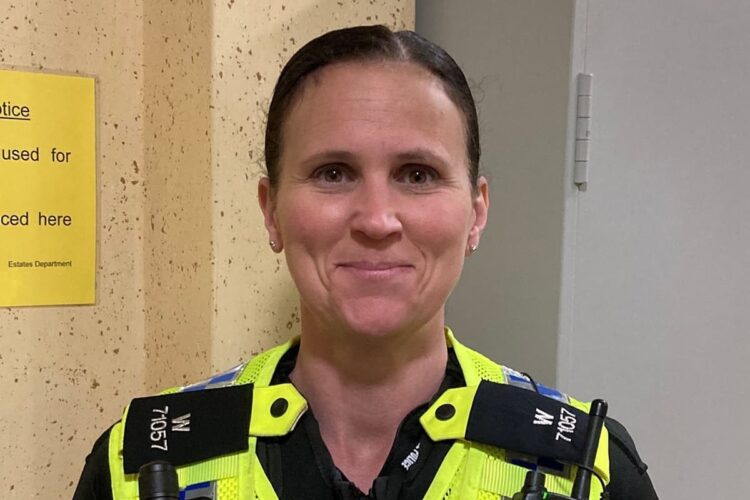
A Wiltshire police officer responded to reports of a man armed with a machete on her first shift, the force confirmed as part of Response Policing Week.
PC Natalie Durman, who joined the Devizes-based response team in January 2026, has been celebrated by Wiltshire Police as she enters her 14th week in the job.
Her route into policing has not been straightforward. She first applied to Hampshire Police at 18 and later sought to become a Special Constable around 14 years ago before instead building a career in the criminal justice system.
That career included roles at Bulford Military Court and as a prison officer. The experience gave her insight into vulnerability, risk and the need for fairness and professionalism.
“Joining the police is something I’ve always wanted,” she said. “It just took a few different paths to get here.”
Starting out on response has been both exciting and demanding. Although she felt prepared after training, she soon realised how much there was still to learn.
“You think you’re ready, and in some ways you are, but training only scratches the surface,” she said.
“There’s so much to know, and every piece of knowledge branches into something else you need to understand.”
She said her biggest challenge has been managing her own high standards.
“I like to know what I’m doing and why. A lot of policing – especially when you’re new – is learning on the job,” she said. “I want to get things right, so that can be tough.”
One incident early in her career has stayed with her. On her first shift, she was called to a burglary report involving a man said to have a machete.
“We came across the male. My sergeant drew his Taser, and I drew my baton and called for assistance. It was a moment where everything you’ve learned suddenly becomes very real,” she said.
PC Durman believes there are misunderstandings about the demands placed on response officers.
“Response is incredibly busy,” she said. “It’s not just attending incidents. It’s investigations, welfare checks, follow-up work… the list goes on. Other departments don’t always see that.”
She said public perception can also be shaped by past experiences or assumptions.
“Some people tar all officers with the same brush. Whether it’s because of past contact or stories they’ve heard, it can overshadow the good work being done every day.
“I absolutely love helping and supporting victims. When they leave and are more content, satisfied or confident that we will help them, it makes all the hard work worth it.”