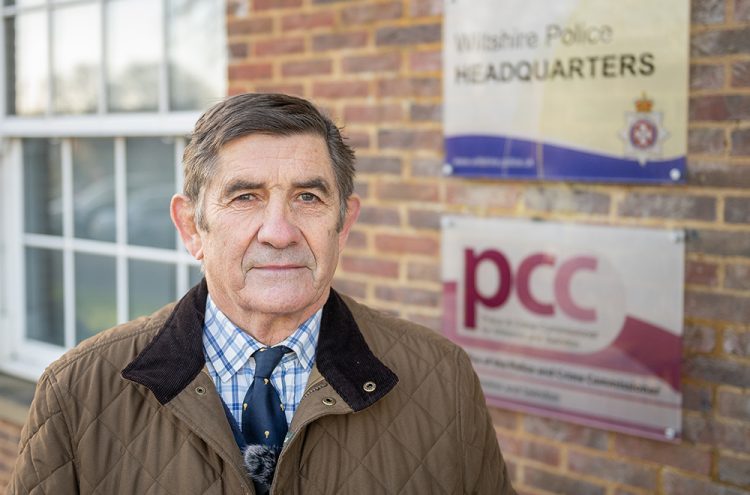
Wiltshire’s Police and Crime Commissioner has warned that plans to merge local police forces into large regional organisations could weaken accountability and distance policing from the communities it serves.

Philip Wilkinson has joined fellow Police and Crime Commissioners in challenging proposals which could see England and Wales’ 43 police forces reduced to as few as nine regional forces.
The plans have been brought into the spotlight following comments from Metropolitan Police Commissioner Sir Mark Rowley, who called for major changes to policing structures.
While Mr Wilkinson agrees that policing needs reform, he said creating larger forces would not automatically address the problems facing the service.
He said: “We should not assume that creating larger police forces will solve the problems policing faces today.
“Many of those challenges are about leadership, performance, workforce planning, culture, public confidence and accountability. Simply creating larger organisations does not automatically solve any of them.”
Mr Wilkinson said he was concerned that discussions about the future of policing were being driven by senior figures within the service rather than the communities affected by the changes.
“I have no doubt those advocating major force mergers want to improve policing but the fact remains this debate is currently being driven by a relatively small number of senior policing leaders rather than by the public,” he said.
He added that the Government needed to establish whether the public supported the proposals and whether there was evidence that mergers would improve policing.
Wiltshire is among a small number of force areas to have directly sought residents’ opinions on the proposals.
More than 1,100 people responded to a survey, with two-thirds saying Wiltshire Police should remain an independent force. Meanwhile, 94% said neighbourhood policing should continue to be shaped by local communities and their priorities.
Mr Wilkinson said: “Here in Wiltshire, we asked that question.
“The message from residents was clear. People want effective policing but they also want policing that remains local, accountable and connected to the communities it serves.”
He also questioned the financial implications of creating regional forces, warning that the cost and disruption of restructuring could divert resources away from frontline policing.
He said: “I have been clear that I support police reform where it improves capability, tackles serious, organised crime and delivers better value for taxpayers.
“But replacing local police forces with regional mega-forces is reform for reform’s sake. Here in Wiltshire, we are proof that bigger is not always better and the force has been delivering more for less for quite some time.”
The PCC also highlighted what he believes is a contradiction between the proposals and the Government’s wider commitment to devolving decision-making powers to local communities.
He added: “At the same time Government is talking about devolving power away from Whitehall and strengthening local decision making, these proposals would move policing further away from the communities it serves.
“The closer policing is to the public, the stronger accountability becomes. The further away decisions are taken, the harder it is for local people to influence the policing they receive.”
Mr Wilkinson warned that previous large-scale public sector reorganisations had demonstrated the potential for significant costs and disruption.
He said: “History shows that major public sector reorganisations are expensive, disruptive and take years to deliver.
“Before we spend vast sums restructuring policing, we need clear evidence that it would improve outcomes for the public. At the moment, I have seen no evidence that replacing Wiltshire Police with a regional force would make communities safer.”
He said any changes to policing must protect neighbourhood policing, local identity and democratic accountability.
Mr Wilkinson also called for the Government to seek views from people outside the police service when considering its future structure.
He said: “I have been a Police and Crime Commissioner for five years and I am clear that policing does need reform. But that reform must be driven by what is best for the public, not what is best for policing itself.
“There are many excellent police leaders across the country but reform should not be shaped solely by those within the current system. Government should also draw on expertise from outside policing and listen to the public and those who hold policing to account.
“My biggest concern is accountability. Some of the most significant failures in policing have only come to light because Police and Crime Commissioners have challenged chief officers and demanded answers on behalf of the public.”
He added that the Government must demonstrate that any proposed restructuring would deliver tangible improvements.
“The question is not whether policing needs reform. It does. The question is whether replacing trusted local police forces with large regional organisations will actually deliver that reform.
“Bigger does not automatically mean better, cheaper or more effective. Bigger will not put more police officers on our streets.
“Before Government embarks on the biggest restructuring of policing in a generation, it must provide clear evidence that it will improve performance, strengthen accountability and make communities safer.”