Wiltshire residents are being urged to protect their eyes when watching a partial solar eclipse later this week – with expert advice from a top optometrist.
The astronomical event will be visible across much of the UK on Wednesday (12 August) from around 6pm. Up to 90% of the sun will be obscured by the moon.
Ahead of the eclipse, an optometrist has issued advice on how to watch it safely and warned against using ordinary sunglasses or homemade filters.
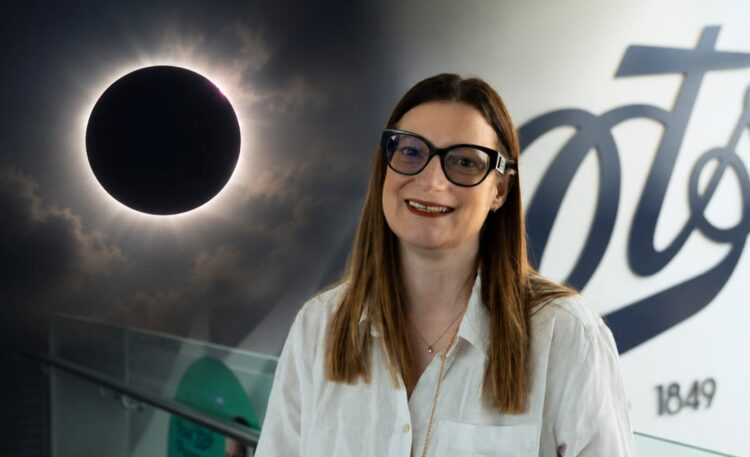
Kyla Black, Boots Opticians Director of Optical Practice, said: “No. Even when most of the Sun is covered, it is never safe to look directly at it with the naked eye during a partial solar eclipse.
“Looking at the sun without the correct protection can damage the retina, which may lead to permanent vision loss.”
During an eclipse, reduced light causes the pupil to dilate to allow more light into the eye.
The diminished brightness can also reduce the eye’s natural aversion to looking at the sun, potentially exposing the retina to dangerous levels of ultraviolet light.
Ms Black said people wanting to watch the eclipse should use certified eclipse glasses which meet the international ISO 12312-2 safety standard.
Watching a livestream from indoors is another safe option.
She said: “Those that are looking to use a camera and take some photos can use specially designed solar filters. The same filters can also be used for the secret astronomers amongst us who own a telescope or simply a pair of binoculars.”
Ordinary sunglasses should not be used to look directly at the eclipse, regardless of how dark they are.
Ms Black said: “No. Regular sunglasses, even very dark ones, do not provide enough protection to safely view a solar eclipse. Only specially designed eclipse glasses or solar viewers should be used.”
Parents are also advised to closely supervise children who want to watch the eclipse.
Anyone using purpose-made eclipse glasses should check them for damage before putting them on.
Ms Black said: “It’s a common myth that wearing multiple pairs of sunglasses can protect you from any harmful UV light – this is untrue and should be avoided at all costs as only purpose-built eclipse glasses can allow you to watch an eclipse.
“Although a fun idea for many may be to make DIY filters and pinhole projectors out of cereal boxes, this can also be dangerous.
“Objects such as smoked glass, colour film, floppy disks, X-ray film, and dark sunglasses are unable to block invisible infrared and ultraviolet rays, potentially leading to damage to your eyesight.
“Budding astronomers who will be looking through cameras, binoculars or telescopes at the eclipse must make sure they have approved solar filters attached.
“If you’re not sure your telescope does, then contact the maker of the product to ensure you know you’ll be safe.”
She added: “The solar eclipse is a wonderful opportunity to appreciate just how important our eyesight is. Taking a few simple precautions will help ensure you can enjoy the incredible event safely.”