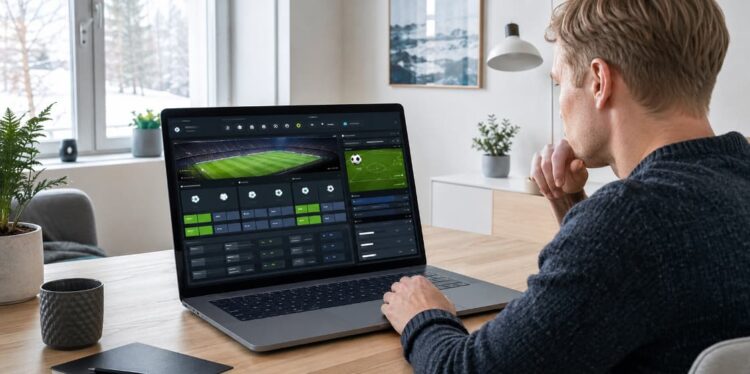
The sports betting ecosystem is gaining today a new layer of digital tools built around speed, context, and simpler mobile use. Official data feeds, live streams, conversational search, personalised markets, and unified account systems are moving into the same betting journey. That change is visible when users compare live events through 1xbet finland, where statistics, odds, and account functions can be reached without leaving the platform. The latest launches suggest that operators no longer compete only on market depth; they also compete on how quickly information becomes understandable and useful.

Official data moves closer to the bet slip
One of the biggest changes is the wider use of official competition data. FIFA appointed Stats Perform as its first worldwide distributor of betting data and betting streams, covering the 2026 World Cup and several other tournaments. Its RunningBall team supplies fast event data for modelling, trading, settlement, and in-play interfaces, while Opta provides scores, player statistics, and match trackers.
For users, the result is a clearer live experience. A goal, card, substitution, or shot can update markets and visual trackers with less delay. Faster feeds also reduce the gap between the match and the information shown on screen, although no system can remove normal broadcast latency or guarantee that every market remains open.
| New tool | What it changes |
| Official live data | Speeds up odds updates and settlement |
| Match trackers | Adds context when video is unavailable |
| Betting streams | Keeps viewing and markets together |
| Conversational search | Finds statistics through plain questions |
| Personalised layouts | Prioritises relevant sports and markets |
Search is becoming more conversational
Another recent step is the arrival of AI assistants inside sportsbook apps. Instead of moving between statistics pages, search boxes, and the bet slip, users can ask a direct question about a player, team, or market. The assistant can then display recent numbers, locate the relevant option, and prepare a selection for review.
This does not turn AI into a reliable predictor. Its value is practical: it reduces the time needed to find information already available inside the platform. Users still need to check the competition, sample size, player status, and market rules. A well-presented answer can be incomplete, especially when line-ups change shortly before an event.
Personalisation now goes beyond recommendations
Sportsbook suppliers are also expanding tools that organise the interface around different user interests. New systems can group audiences by preferred sports, activity, or market type, then show more relevant bet cards, boosted selections, and event content.
The useful part is not simply seeing more promotions. Better personalisation can reduce clutter by placing followed teams, favourite competitions, and familiar market formats near the top of the screen. It can also improve notifications, so users receive fewer alerts unrelated to the events they actually follow.
There is a clear boundary, however. Personalisation should help people navigate, not create pressure to place repeated bets. Deposit limits, time reminders, cooling-off options, and self-exclusion controls need to remain easy to find in the same mobile environment.
One app is replacing several separate journeys
The market is also moving toward unified products. Some platforms are combining sportsbook sections, exchanges, live scores, streaming, and account management in one app. Mobile access through the 1xbet app is one example of how these functions are increasingly available on the same device. Physical venues are also adding mobile registration and self-service kiosks connected to the same account.
This creates a smoother path between research and action:
- check the schedule and confirmed line-up;
- open live statistics or a match tracker;
- compare pre-match and in-play markets;
- review the bet slip before confirming;
- return to limits, history, or support when needed.
A shared account can make deposits, withdrawals, verification, and betting history easier to manage. It also concentrates more personal and payment data in one place, making strong authentication and clear security settings more important.
Integrity tools are growing behind the screen
Not every new tool is designed for the user interface. Data companies and sports bodies are investing in monitoring systems that examine unusual market movement, suspicious betting patterns, and possible information leaks.
High-frequency data can help analysts identify activity that differs sharply from normal market behaviour. These systems do not prove manipulation on their own, but they can highlight matches or periods that deserve further review. Official data partnerships also create clearer records for settlement and integrity investigations.
This quieter part of the digital ecosystem matters because faster markets increase both convenience and complexity. Better front-end tools need equally strong controls behind them.
The next contest will be about clarity
The new generation of betting products is trying to place statistics, streaming, search, payments, and account controls inside one continuous experience. The strongest tools are those that remove unnecessary steps without hiding risk or overwhelming the user.
Official feeds can improve timing, AI can simplify research, and personalisation can make crowded interfaces easier to navigate. None of them can make sport predictable. Their real value lies in helping users understand what they are viewing, check the details, and make decisions with clearer information.