
When winter storms hit or summer heatwaves arrive, your car faces unique challenges that can lead to dangerous situations or expensive repairs. Regular seasonal checks of your vehicle’s essential components—particularly brakes, tyres, battery, and lights—can prevent most weather-related breakdowns and significantly reduce your risk of accidents on British roads. In particular, with respect to Ridex brake discs and other quality brake components, their effectiveness directly depends on regular inspection and timely replacement, as weather conditions can accelerate wear through moisture, road salt, and temperature fluctuations that affect stopping performance year-round.

The solution is straightforward: dedicate two hours each season to inspect and maintain these critical systems. This simple routine can save you hundreds of pounds in emergency repairs whilst keeping you and your passengers safe throughout the year. Many UK drivers overlook these checks until problems arise, but preventive maintenance remains the most cost-effective approach to vehicle ownership.
Why seasonal checks matter in British weather
The UK’s unpredictable climate creates specific challenges for vehicles. Winter brings freezing temperatures, salt-covered roads, and reduced daylight hours. Summer presents its own issues with extreme heat affecting engine cooling systems and tyre pressure. Spring and autumn bring heavy rainfall that tests your windscreen wipers and tyre tread depth.
According to breakdown services, a significant portion of callouts could be avoided through proper seasonal maintenance. Battery failures increase dramatically during cold snaps, whilst overheating issues peak during summer months. These patterns demonstrate why adapting your maintenance schedule to seasonal changes proves essential.
Essential winter preparations
-
Battery and electrical systems
Cold weather reduces battery capacity whilst simultaneously demanding more power for heating, lights, and defrosting systems. Check battery terminals for corrosion and ensure connections remain tight. Most batteries last between three to five years, but harsh winters can shorten this lifespan considerably.
Test your lights regularly during winter months when you’ll use them most frequently. Replace any dim or failed bulbs immediately, keeping spares in your boot for emergencies. Clean headlight lenses to maximise visibility—dirty lights can reduce effectiveness by up to half.
-
Brake system inspection
Winter conditions demand optimal braking performance. Moisture and road salt can accelerate brake component wear, making regular inspection crucial. Quality brake discs, such as those from established manufacturers like Ridex, Valeo, Bosch, Brembo, TRW provide reliable stopping power when properly maintained. Check brake pads for adequate thickness and listen for unusual sounds when braking.
Professional mechanics recommend having brake fluid tested annually, as it absorbs moisture over time, reducing its effectiveness. This becomes particularly important before winter when stopping distances naturally increase on wet or icy roads.
Seasonal maintenance checklist by quarter
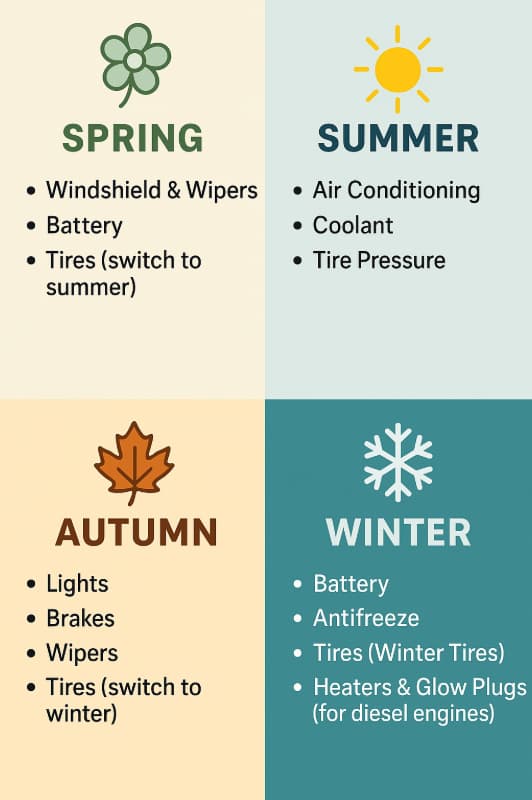
The infographic above provides a comprehensive visual guide to seasonal car maintenance throughout the year. As shown, each season requires focus on specific vehicle components. Spring preparations include windshield and wiper checks, battery testing, and switching from winter to summer tyres. Summer demands attention to air conditioning systems, coolant levels, and tyre pressure monitoring. Autumn brings the need for lighting inspections, brake checks, and preparing to switch back to winter tyres. Winter requires the most extensive preparations, including battery maintenance, antifreeze checks, winter tyre installation, and heater system testing—with diesel engines needing special attention to glow plugs.
This systematic approach ensures no critical component gets overlooked as weather conditions change. Following this seasonal pattern helps British drivers maintain their vehicles proactively rather than reactively responding to breakdowns.
Summer and warm weather checks
-
Cooling system maintenance
Your engine’s cooling system works hardest during summer months. Check coolant levels weekly and look for signs of leaks beneath your vehicle. Ensure the coolant mixture contains the correct ratio of antifreeze to water—despite its name, antifreeze also raises the boiling point, preventing overheating.
Inspect radiator hoses for cracks or soft spots that might indicate imminent failure. A burst hose during a summer journey can leave you stranded and potentially cause expensive engine damage.
-
Tyre condition and pressure monitoring
Hot road surfaces and long summer journeys put extra stress on tyres. Check tread depth across the entire width—UK law requires a minimum of 1.6mm, though many experts recommend replacing tyres at 3mm for optimal wet-weather performance.
The following table outlines recommended maintenance frequencies for key vehicle components across different seasons:
| Component | Spring Check | Summer Check | Autumn Check | Winter Check |
| Battery | Monthly visual inspection | Test voltage if over 3 years old | Full test before cold weather | Weekly check in freezing conditions |
| Tyres | Switch to summer tyres; check tread depth | Weekly pressure checks | Switch to winter tyres; inspect sidewalls | Check pressure fortnightly |
| Brakes | Visual inspection of discs and pads | Check for unusual noises | Full inspection including fluid | Test effectiveness on dry road |
| Lights | Clean lenses; test all bulbs | Check alignment | Replace dim bulbs | Daily checks during short days |
| Wipers | Replace if streaking | Check washer jets | Install winter blades | Keep de-icer handy |
| Fluids | Top up washer fluid | Check coolant weekly | Test antifreeze concentration | Ensure screen wash won’t freeze |
This maintenance schedule helps drivers stay ahead of potential problems by addressing components before seasonal stresses cause failures. Regular checks, as detailed in the table, typically take only minutes but can prevent hours of roadside delays.
Year-round essential checks
-
Windscreen and visibility maintenance
Clear visibility remains crucial regardless of season. Replace wiper blades annually or when they leave streaks. Keep windscreen washer fluid topped up with appropriate mixture—summer formula removes insects whilst winter mixture prevents freezing.
Check windscreen for chips or cracks that might worsen with temperature changes. Many insurance policies cover windscreen repairs without affecting no-claims bonuses, making prompt attention cost-effective.
-
Emergency kit preparation
Maintain a seasonal emergency kit in your vehicle. Winter items include ice scraper, torch, blanket, and jump leads. Summer additions might include extra water, sun shade, and coolant. Year-round essentials include first aid kit, warning triangle, and mobile phone charger.
Professional servicing versus DIY checks
Whilst many seasonal checks can be performed at home, certain tasks require professional expertise. A glance at the road accident statistics in the UK, which often highlight vehicle defects as a contributing factor, underscores the importance of this diligence. According to provisional data for 2024, there were 128,375 casualties in Great Britain, including 1,633 fatalities. Annual services ensure complex systems receive proper attention, potentially identifying issues before they become serious problems.
Modern vehicles often display service reminders, but don’t rely solely on these indicators. Severe weather conditions or unusual driving patterns might necessitate more frequent maintenance.
Seasonal car maintenance in the UK doesn’t require mechanical expertise—just commitment to regular checks. By investing minimal time in preventive maintenance, you’ll enjoy safer journeys, avoid inconvenient breakdowns, and potentially save substantial amounts on emergency repairs. Whether you drive a brand that mechanics find straightforward or challenging to service, regular seasonal maintenance remains your best defence against unexpected failures. Start your seasonal check routine today to ensure your vehicle remains reliable throughout Britain’s changing weather conditions.
Sources:
- Society of Motor Manufacturers and Traders (SMMT) maintenance recommendations
- Department for Transport
FAQ – Frequently Asked Questions
Q: How often should I perform seasonal car checks? A: You should perform comprehensive checks four times a year, at the start of each season. Additionally, some components like tyre pressure and fluid levels benefit from monthly monitoring, especially during extreme weather conditions.
Q: What are the most critical components to check before winter? A: The most important winter checks include your battery (as cold reduces its capacity), antifreeze concentration, tyre condition (consider winter tyres), lights (for dark mornings and evenings), and heating systems. Diesel engines also need glow plug inspection.
Q: Can I perform seasonal checks myself, or do I need a mechanic? A: Many seasonal checks can be done at home, including checking fluid levels, tyre pressure, lights, and wiper blades. However, brake system inspections, battery voltage testing, and complex mechanical issues should be handled by professionals during annual services.
Q: How much money can regular seasonal maintenance actually save? A: Regular maintenance can save hundreds of pounds annually by preventing emergency breakdowns and extending component life. For example, catching a cooling system issue early might cost £50-100 to fix, whilst engine damage from overheating could cost thousands.
Q: What should I keep in my seasonal emergency kit? A: Year-round essentials include a first aid kit, warning triangle, torch, and phone charger. Add ice scraper, blanket, and jump leads for winter. Summer additions include extra water, sun shade, and coolant. Always carry your breakdown service details.