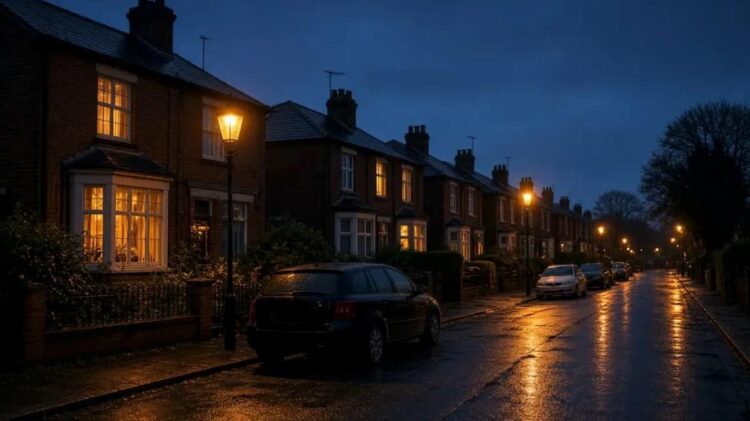
Most people whose keyless car is stolen find out the same way. They walk outside in the morning, and the drive is empty. There’s no broken glass and the alarm didn’t go off. The neighbours didn’t hear a thing.
That isn’t bad luck. It’s how this kind of theft is designed to work.
How a relay theft actually works
A keyless car unlocks and starts when it detects its fob nearby. Thieves exploit that with a pair of cheap radio devices. One person stands near your front door or a ground-floor window and picks up the faint signal from the fob inside your house, often from a hook in the hallway or a bowl on the kitchen side. The device boosts that signal and passes it to a second person standing next to the car. The car thinks the key is in range, so it opens. Push the start button and it’s gone, usually inside a minute.
The Crime Survey for England and Wales found that the thief manipulated the signal from a remote locking device in 46.7% of vehicle thefts in the year to March 2025. Police in England and Wales recorded 115,299 thefts of a motor vehicle in the year to June 2026, according to the ONS. That figure is slightly down on the year before, but it still works out at more than 300 a day.
Parliament has caught up a little. The Crime and Policing Act 2026 makes it an offence to own, make or supply a device built for vehicle theft, with up to five years in prison. At the time of writing, that section is not yet in force. Even when it is, it won’t make your car any harder to open tonight.
The basics that genuinely help
Police and insurers keep repeating the same advice, because it works:
- Keep the fob in a signal-blocking pouch or tin, and test it. Stand by the car with the fob in the pouch and try the door handle. A lot of cheap pouches fail within a few months.
- Keep keys away from the front of the house. A fob on a hook by the door is the easiest target.
- Switch off keyless entry if your car lets you. Many models can do this through the settings menu or the dealer.
- Use a visible steering wheel lock. It’s old-fashioned, but thieves want a quick job and will move on to an easier car.
- Ask about software updates. Some makers have released security fixes for models that are widely targeted.
None of these makes a car impossible to steal. They make it slower and noisier, and that is usually enough.
The part nobody thinks about: your neighbours’ cameras
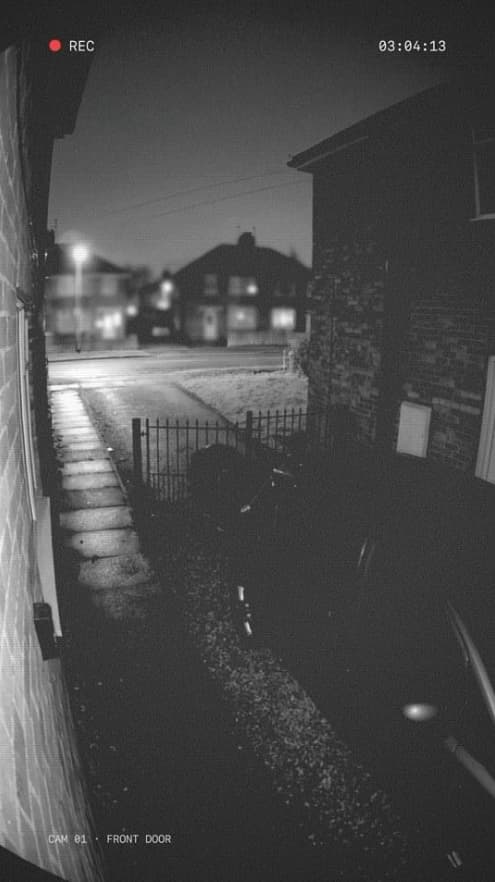
Here’s what struck me when I started looking at this properly. Most streets now have several doorbell cameras and CCTV units pointing at the road. A relay theft takes two people standing around for a minute, often near a front door. There’s a good chance at least one camera nearby caught them arriving, waiting or leaving.
But that footage almost never gets used. The owner doesn’t know anything happened. Nobody knocks on doors. Ring’s cloud storage keeps clips for 30 days by default, and many cameras that record to a memory card overwrite in under a week. By the time anyone thinks to ask, the clip has often gone.
I saw this first-hand. I’ve moved house more than once and watched crime happen on my own street. Each time I wanted to warn the people around me and ask what their cameras had seen. But I didn’t know them well, there was no group chat for the road, and there was no simple way to do it.
What to do in the first hour
If your car has gone, or someone has tried the doors:
- Call 999 if the theft is happening now, or report it to the police straight away afterwards. Get a crime reference number, because your insurer will need it.
- Write down the time window as closely as you can, such as when you last saw the car and when you noticed it was missing.
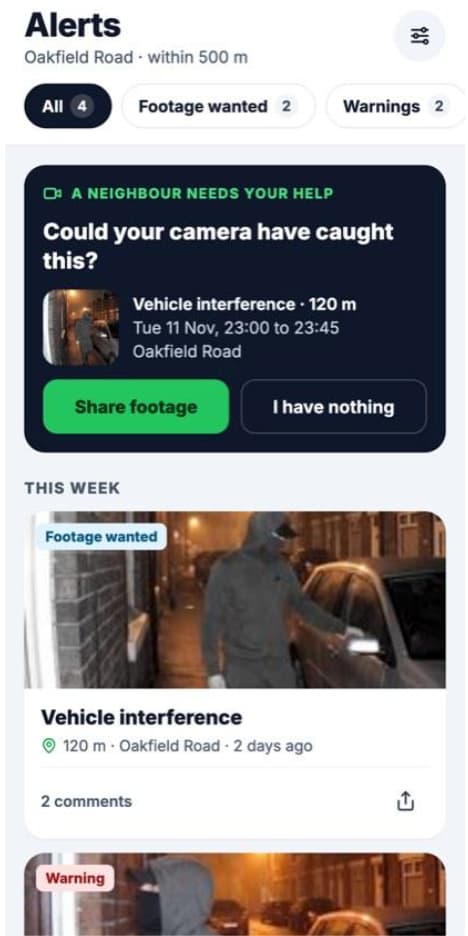
- Ask nearby cameras now, not next week. Knock on doors or post in your street’s group, and give the exact time window so people only have to scroll through a short stretch of footage.
- Tell your neighbours. Thieves who take one car often come back for another on the same road, or the same model a few streets away.
- Hand any footage to the police under your crime reference. Don’t post faces on social media. It can harm a prosecution and cause problems under data protection law.
Steps 3 and 4 are where most streets fall down. That gap is the reason I built StreetAlert. It’s a free app where verified neighbours can send car theft alerts to the people on their road and ask nearby doorbells and CCTV to check a time window. Each camera owner decides whether to share. The app never connects to anyone’s camera, and it doesn’t name your house.
Keyless theft is quick and quiet, and it relies on nobody noticing. The more a street talks to itself, the worse those odds get for the thieves.