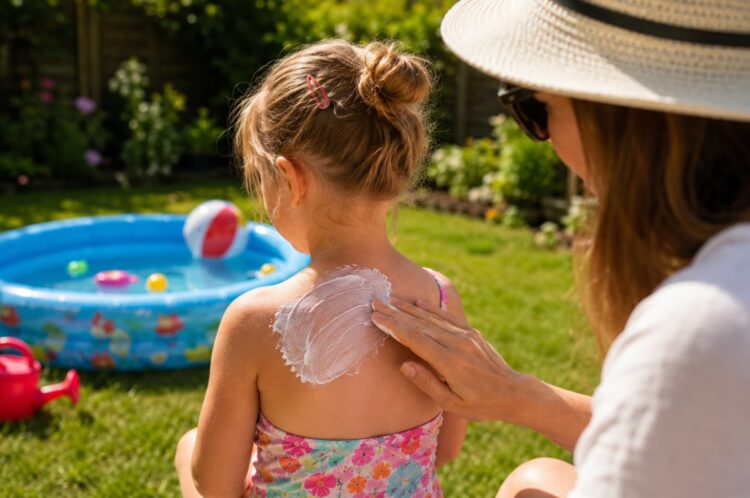
Families are being urged to take extra care during the current spell of hot weather after new figures revealed a sharp increase in children requiring hospital treatment for severe sunburn.

The Royal Society for the Prevention of Accidents (RoSPA) and the Children’s Burns Trust (CBT) have issued a safety warning as parts of England face red weather warnings and heat health alerts.
Data from the CBT shows that 252 children were admitted to specialist burns units with sunburn injuries in 2025. This represents a 46.5 per cent increase compared with 172 cases recorded in 2024.
The organisations say children are particularly vulnerable during periods of extreme heat because their skin burns more easily and they may not recognise the early signs of heat-related illness.
The warning comes as research found that 51 people died from excessive natural heat in the UK between 2014 and 2023. More than 1,800 hospital admissions linked to heat were also recorded in England over the same period.
Of those deaths, 16 occurred during 2022, the last time a red weather warning for extreme heat was in place.
RoSPA and the CBT said heatwaves are becoming more frequent and intense in the UK, increasing the risk of preventable injuries and deaths.
Steve Cole, Director of Policy and Impact at RoSPA, said: “Heatwaves are no longer rare events, and the consequences are becoming clearer year on year.
“These deaths and hospital admissions are not inevitable.
“By following straightforward advice on sun safety, hydration and cooling down, people can dramatically reduce the risk to themselves and their families.”
Ken Dunn BSc FRCS(Lond) FRCS(plast) FRCS(ed), Consultant Burns and Plastic Surgeon (retired) and Vice Chair at CBT, said: “We are seeing a worrying rise in children experiencing sunburn, which is painful, distressing and entirely preventable.
“Simple steps like keeping children out of direct sun, covering up exposed skin and reapplying sunscreen regularly can make a real difference.”
The charities are encouraging families to protect children from direct sunlight, keep them hydrated and watch for signs of heat exhaustion, particularly during the hottest part of the day between late morning and mid-afternoon.