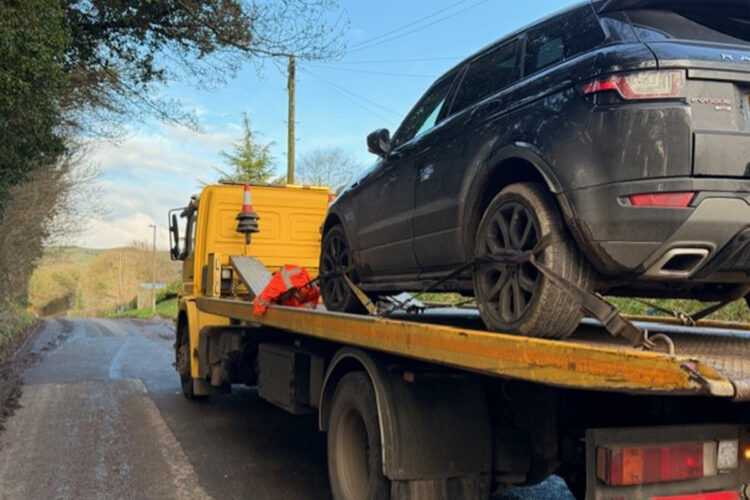
Last October, Wiltshire Police ran Operation Alliance across the county for a week. The results were modest by headline standards. One stolen vehicle was recovered in Swindon. A man in his 20s was arrested on suspicion of failing to stop, dangerous driving, possession with intent to supply class A drugs, drug driving, criminal damage, and aggravated vehicle taking.
Roads Policing Unit officers patrolled the main road networks with the Local Police Tasking Team and Neighbourhood Policing Teams. Twenty forensic DNA marking kits went out to residents considered most at risk. Four officers from the Forensic Collisions Investigation Unit got trained as Stolen Vehicle Examiners with new equipment. By the numbers, it reads like a routine week of action, and on any other force press release I would probably have moved past it. What made this one worth coming back to, nine months later, is something that Detective Inspector Steve Edwards said about how stolen cars actually move through the system once they have been taken.
Edwards runs the Burglary and Complex Fraud Team and was the force lead for Operation Alliance in Wiltshire. He told the public that stolen vehicles are often stored at other locations for several days to determine whether the vehicle is fitted with a tracker, before being moved again. That is a remarkably specific piece of operational detail from a serving DI. It describes exactly what the vehicle recovery trade calls a soak yard, even if Edwards did not use that term himself. The idea is simple. You steal a car, you do not drive it to the chop shop or the container port that night. You park it on a quiet residential street or behind a lock up, somewhere it will not attract attention for a few days, and you watch. If nobody comes for it in 48 to 72 hours, the assumption is that it does not have a tracker and it is safe to move. If police turn up within the first day, you walk away and lose one car instead of exposing your whole operation. I have seen exactly the same pattern described by fleet recovery operators working commercial vehicles. Vehicle tracking data from fleet clients shows the same split. Vehicles with real time GPS tracker alerts, gets flagged and recovered within hours. Vehicles without tracking, or with tracking that only reports on a schedule rather than on motion, tend to sit in soak for days. By the time anyone is looking for them, the trail is cold.
Edwards asked the public to report locations that might be used to store stolen vehicles or stripped parts, and that request is doing real police work even if it sounds like standard community messaging. Soak yards work because they are invisible. A stolen car parked in a cul de sac for three days does not look stolen to anyone walking past. It looks like it belongs to someone visiting a neighbour. The intelligence Edwards is asking for is the kind that a tracker alone cannot provide because the tracker tells you where the car is but not whether the building next to it has had six different cars parked outside it in the last month. That comes from residents. It fills the gap between what technology can do and what it cannot.
Since January 2025, there have been 345 reports of vehicle theft to Wiltshire Police. According to the force, citing national data, almost half of all vehicles stolen in 2024 were left unlocked. Edwards himself added that people should lock their vehicles as soon as they leave them unattended and that keyless entry fobs should be stored in RFID blocker pouches to prevent relay theft. The relay point matters because the flatbed tactic, where thieves load a car onto a truck without ever starting the engine and defeating the immobiliser entirely, does not work against a tracker that is reporting its position independently of the vehicle’s own electronics. A tracker with a motion sensor and its own battery, hidden somewhere non obvious, will report the moment the car moves regardless of whether the ignition is on. The soak period Edwards described is the criminal countermeasure to exactly this. They know the trackers exist. They are testing for them. The counter to the counter is a tracker that does not ping on a schedule but sits silent until it detects motion, and then reports immediately, giving police a window of maybe an hour or two before the car disappears into a container or gets stripped.
Operation Alliance was a national initiative. Wiltshire’s part of it involved the National Crime Agency, Border Force, and Port Authorities alongside the local teams. The scale of the thing nationally is bigger than one recovered vehicle in Swindon, but I keep coming back to Edwards’ description of the soak because it is the most honest public statement I have seen from a serving officer about how the cat and mouse between trackers and thieves actually works on the ground. Most force press releases talk about locking your doors and hiding your keys. Edwards told you what the thieves do after they have already taken the car, and that is more useful information for anyone thinking about what kind of tracking to fit or whether to fit one at all.